Gym floor service at Finished Floors in Orangevale, California

Urethane is a versatile compound that has a wide range of applications.

Although the term describes three distinct substances, they share chemical forms that combine oxygen, nitrogen, and hydrogen. While urethane has many uses, it is mainly used as a sealant because of its enhanced resistance to water, oxidation, oil, and abrasion: not to mention its durability in different temperature extremes.

As a water-based floor sealant, it alleviates the need for burnishing, stripping, and cycle cleaning. It is the perfect floor sealant because it is a semi-permanent, single coat that better protects your floors than an acrylic finish. If you want shiny, slip-resistant, and durable floors, urethane is the way.

At Finished Floors, we recommend urethane for your flooring needs. Having worked with many clients providing exceptional urethane installation, we are the go-to flooring service when you want to revamp your premises. We also go the extra mile to offer additional maintenance services, like repairs and removal of unwanted finishes in your building. 

If you have a hard floor made of cement or wood, you may need to consider installing urethane, a protective coat. Let’s look at urethane concrete and everything you need to know about this hard floor sealant.

Everything You Need to Know About Urethane

As mentioned, urethane provides durable flooring, protecting it from extreme temperatures and abrasion caused by heavy machinery. These are the primary reasons it is commonly used for commercial floors, especially warehouses, production plants, R&D labs, food manufacturers, and industrial floors.

Urethane holds up perfectly against heavy foot traffic usually found in commercial buildings. There’s no doubt that this flooring solution is more durable than acrylic, guaranteeing enhanced durability when you have a concrete subfloor. We have invested in this advanced technology of industrial floor coating, providing our customers with the best flooring solutions that meet and exceed their needs.

Urethane resin technology is designed to bind with your floors, creating a durable, high-performance floor. You do not have to worry about harsh chemicals, abrasive machinery, thermal shock processes, or other causes of damage to floors. With this bio-based, eco-friendly flooring technique, your floor finishes will last for decades before you consider removal. Reasons why urethane is mainly suited for industrial applications.

.01 Most Economical Flooring for Large Areas

Besides offering a range of benefits over conventional floor finishes, urethane is one of the most cost-effective solutions for large spaces. Whether your facility has over 3,000 square foot areas, urethane guarantees a lengthy lifespan, so you don’t have to repair or replace your floors every few years. This saves you a lot of money and time, making it the most economical option when you have a hard subfloor like concrete. Urethane is less costly than most vinyl, epoxy, and tile flooring.

.02 Long-Term Durability

Unlike commonly used flooring, urethane is rugged and more durable, with a flexible coating that allows it to last more than 30 years. Commercial establishments benefit from their antimicrobial flooring that protects against fungal growth and bacteria, ensuring the facility is hygienic throughout its life cycle. It remains pristine despite constant regular washings, decontamination, and sanitizations. Property owners enjoy enhanced durability and hygiene without compromising operations or safety within the building.

.03 Thermal Shock Resistant

If your floors are constantly subjected to thermal cycling from hot to cold washes, urethane is the most suitable sealant. Urethane can withstand regular cleaning and extreme temperatures without any sign of damage. Most buildings with hard floors rarely consider extra protection until the damage is done, resulting in costly repairs and maintenance. Some facilities that expose their floors to extreme temperatures are breweries, pharmaceutical production, and food and beverage manufacturing.

.04 Impact and Chemical Resistant

The properties of urethane flooring allow it to be long-lasting and resistant to harsh chemicals and impact from machinery. Commercial facilities vary, but the conditions their floors are exposed to are almost similar. Corrosion and abrasion are often the causes of flood damage in industrial buildings, hence the need for a more resistant sealant. The versatility of urethane makes it a suitable option for these rugged conditions, whether at machine shops and firehouses or airplane hangars and warehouses.

.05 Slip Resistant

Safety is the primary concern for most commercial spaces, and when the floor has the potential to cause accidents due to spills, high traffic, and cracks, you need to consider a better flooring solution. Failure to address such issues can deter operations or result in legal action because of negligence. Our goal is not just to install a slip-resistant sealant but also to ensure your spaces are up to code. The last thing you want is a significant injury caused by a slip in your facility. We recommend urethane for manufacturing and industrial areas where slips are more frequent.

.06 High Aesthetic Appeal

Urethane flooring is visually pleasing, making it great for stadiums, hotels, and other high-traffic facilities. We have taken it to another level by combining its durability with customization to meet the needs of our clients without compromising the style and design of their interiors. Some limitless colors and pigments can be added to customize urethane flooring to blend with your company’s branding or décor. You have the option of a UV-protected top coat to protect against discoloration and fading, so you can use it for indoor or outdoor spaces without worrying about deterioration.

.07 Fast Turnaround

When you schedule urethane installation, our experts leverage state-of-the-art equipment to grind your floors until they are smooth and eliminate other materials that aren’t part of your floor. We apply urethane to your floor and then give it at least 8 hours to cure. Finally, a polyurethane top coat is added and dries within 2 hours. The installation process is quick, so you can have us drop by on the weekend or during business hours, guaranteeing minimal disruptions. If we conduct installation over the weekend, your flooring will be ready for business on Monday morning.

.08 Environmentally Safe

Urethane has no VOCs that usually compromise air quality, and it is eco-friendly, which is a proactive approach to reducing your carbon footprint. For this reason, it is safe enough to be used in commercial and residential settings. It is also antimicrobial, protecting you against fungal growth and bacteria even after a surface has been exposed to moisture for a long. You never have to worry about toxic fumes after urethane installation, ensuring everyone’s safety when operations resume.

.09 A Strong ROI

Urethane is one of the most affordable flooring products, giving commercial and industrial facilities a strong return on investment (ROI) and a lifespan of up to 30 years. It is durable, hygienic, odorless, and resistant to abrasion, chemicals, and thermal shock. We can help you ensure the safety of your workplace by installing urethane within three days so that you can enjoy three decades of durability. Enjoy our customized finishes with endless color choices to ensure you get precisely what you are looking for.


How to Prepare Your Floor for Urethane Installation

Now that you know what urethane flooring is and its benefits, how do you prepare your floor for urethane coating? Before enjoying the long-lasting protection urethane coatings provide for your industrial or commercial floors, a professional must inspect and prepare your floors to ensure a seamless installation. The proper technique must be implemented perfectly, so we don’t recommend DIY alternatives.

Our team of highly trained installers leverages standard industry tools and extensive experience to ensure the urethane coating serves the intended purpose. We eliminate all the guesswork from the process, ensuring your floor remains pristine for the next thirty years. Below is the process we use to prepare your floor for urethane installation.

We are always ready

Contact Us Today

Common Commercial Urethane Flooring Problems and How to Solve Them

Urethane is a tricky material, and if applied by an inexperienced one, it can compromise the quality and appeal of your surfaces. Industrial and commercial establishments usually opt for epoxy flooring because of the beautiful, lustrous finish that protects the surface after curing. Unfortunately, if urethane floor coating isn’t appropriately treated, it impacts the appearance and texture of your floors.

Urethane is a two-part product, resin, and activator, that requires professional installation and maintenance to get the perfect ratio. To avoid imperfection in the final result, you should not turn urethane installation into a DIY project if you don’t have the expertise needed. Even a professional technician can still make a mistake, but they have the tools and experience to repair the problem before it gets out of hand.

If you detect damage after urethane coating installation, don’t despair! Some common problems that usually arise from improper installation include fast deterioration and low resistance to harsh weather conditions, among others. These issues can grow to more severe floor problems, hence the need to work with a professional company. Let’s look at some common problems and how to repair them.

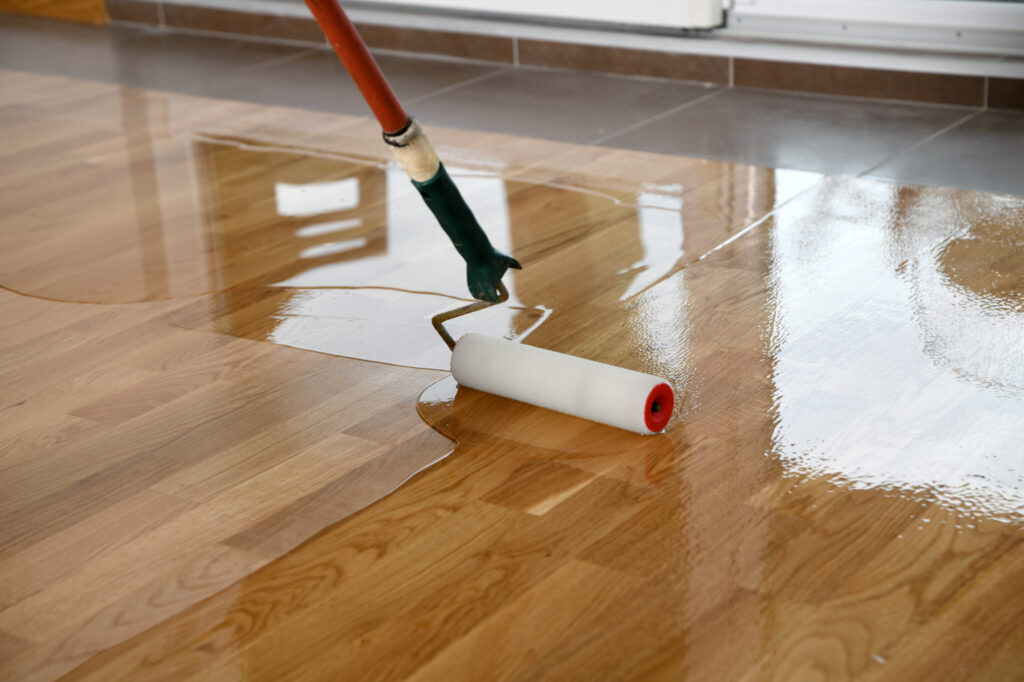
Lacquering wood floors. Worker uses a roller to coating floors.

Problem: Urethane Floor Peeling

If a portion of your epoxy floor coating is tearing away or coming up soon after installation, it is a sign of peeling. If the problem is not addressed in time, peeling can make your floors uneven, damaging the concrete floor under it and your professional appearance. It is advisable to schedule routine maintenance inspections with an expert so that trivial peeling signs are rectified.

There are many reasons your urethane surface coating is peeling, and we can assess the damage, determine the cause, and recommend a suitable solution. The most common causes of peeling urethane are incredibly high temperatures and humidity or low temperatures during installation.

These conditions are not ideal for the resin and hardener to set, resulting in moisture seeping out of the concrete beneath the coating. Accumulation of moisture can cause different issues, like peeling. Temperature fluctuations can also increase condensation, turning the moisture problem worse. 

Before repairs, preparation is vital for smooth urethane flooring. We will ensure your floors meet the following conditions:

  • Clean of Debris and Oils: These substances usually get trapped under the urethane floor coating, compromising the resin’s ability to adhere to concrete floors. Grease and oils obstruct the application, causing the resin to set incorrectly, which leads to peeling.
  • Smooth Surface: While it is vital to smooth out the surfaces before urethane installation, it may cause your peeling problem. We prefer strategically leaving open pores on the floor so the epoxy can adhere properly. A professional can ensure the coating doesn’t peel off and the resin sets properly for a durable urethane floor coating.
  • The Surface is Completely Dry: Whether a technician removed the previous urethane flooring or you washed your floor, it needs to dry for at least 24 hours. Even if you apply fresh resin without properly drying the surface, you’ll incur the same problem.

Solution

The best way to prevent your urethane coating from peeling is to work with a professional floor company. We provide exceptional urethane installation services and follow-up care to ensure it remains in tip-top condition. However, if the damage is irreversible, our technician can remove the coating and install a new one correctly.

Removing urethane flooring requires a trained professional to ensure that safety precautions and guidelines are followed during the process. A floor grinder machine and other tools ease urethane removal, and a heavy-duty vacuum removes the lingering particles. Before we install a new coating, the surface needs to be clean and dry.

Problem: Urethane Floor Blistering

If you come across cratering, pinholes, and bubbles on your epoxy coating, it may be time to call a reputable floor service. A blistered look is not a welcoming sight in any commercial establishment, and if the problem is not addressed early, it can result in further deterioration. Blisters are often caused by resin peeling, whether it’s too cold or the sun hits the curing resin directly. Other causes of urethane floor blistering are:

  • Incorrect Epoxy Mixing: This is a common problem in DIY urethane applications, whereby the resin and hardener ratios are incorrect. The bubbles form even when the epoxy is in a dense state, compromising the final results. A professional technician takes the time to ensure everything is in the right portion before the application commences.
  • Too Porous of a Floor: Many pores in your concrete floor allow air to rise beneath the coating as it cures. The resin traps the air under the epoxy, creating bubbles that harden and make the surface uneven. There’s also a chance the air pockets may rise as the urethane floor coating rises, leading to craters or pinholes if the bubbles are enormous.
  • The Wrong Proportions: Urethane resin and hardener must be in perfect balance. The ratio varies from product to product, making it tricky for inexperienced individuals. A professional installation is the best solution to ensure everything balances out.
  • Rushed Application: If your urethane floor coating was applied in a rush, you might see bubbles forming. While an expert installs the coating fast to ensure the resin doesn’t cure before application, the process is conducted carefully to avoid blistering. We ensure each coat gets adequate time to dry, preventing the application of fresh urethane to a base that hasn’t cured.

Urethane floor blistering may create an uneven surface; if the problem is not addressed, it could be hazardous. Even if your floor has pinholes and bubbles, they create an unprofessional finish that can compromise your concrete’s structural integrity.

Solution

Whether you have a few bubbles or an entire surface has blisters, you can rely on our team of professionals to correct the problem. The easy fix involves sanding away a coating layer and buffing the surface in preparation for a new coat of urethane. The most effective way of avoiding blisters is to hire a flooring company to apply your new floors.

Epoxy is a tricky substance, so taking time for a neat and satisfactory result is vital. We will ensure the surface isn’t too porous or too smooth and the resin is mixed well with the hardener before application. However, if the problem is too severe, the best solution will be to remove the existing coating.

These are some common issues property owners need to look out for to hire a trusted urethane removal service. If you see any problems with your urethane floor coating, we can help. Whether your coating needs removal, repair, or installation, we provide exceptional services at competitive rates. 

We have years of experience in providing commercial and industrial urethane flooring, and with the help of our experts, we can make your establishment shine. Leverage our extensive industry experience and knowledge to enjoy durable and appealing floors. Our professional installers understand the needs of commercial and industrial establishments, allowing us to customize urethane floor coating designs that exceed your expectations.

Have Questions?

We’re Happy to Help!

Get In Touch